
You can not select more than 25 topics
Topics must start with a letter or number, can include dashes ('-') and can be up to 35 characters long.
628 lines
16 KiB
628 lines
16 KiB
<!--
|
|
---
|
|
title: Next Steps in Data Science
|
|
type: lesson
|
|
duration: "0:45"
|
|
creator: Joseph Nelson
|
|
---
|
|
-->
|
|
|
|
<h1>Next Steps in Data Science</h1>
|
|
|
|
<!--
|
|
|
|
## Overview
|
|
This lesson recaps what students have achieved, contextualizes that into the broader data science ecosystem, and recommends libraries and resources to further their journey.
|
|
|
|
## Learning Objectives
|
|
*After this lesson, you will be able to:*
|
|
|
|
- Identify core libraries in the data science ecosystem, and their purpose
|
|
- Determine how to learn more about which area is most interesting to you!
|
|
- Discuss hiring in the data science job market, and strategies to support a search
|
|
|
|
## Duration
|
|
45 minutes.
|
|
|
|
|
|
## Suggested Agenda
|
|
|
|
| Time | Activity | Purpose |
|
|
|-------------|----------|---------|
|
|
| 0:00 - 0:03 | Welcome |
|
|
| 0:03 - 0:18 | Introspection and Review |
|
|
| 0:18 - 0:43 | Establishing Yourself |
|
|
| 0:43 - 0:45 | Summary |
|
|
|
|
## Materials and Preparation:
|
|
- Give out the link to the slides.
|
|
- This lesson, more than any other in this unit, gives the instructor the ability to inject their own perspective throughout the lesson. Do not hesitate to do so!
|
|
|
|
## Differentiation and Extensions
|
|
|
|
- Add your own experience throughout the lesson.
|
|
- If you're teaching this on campus to students, feel free to add several interview prep questions towards the end.
|
|
|
|
-->
|
|
|
|
---
|
|
|
|
## Learning Objectives
|
|
*After this lesson, you will be able to:*
|
|
|
|
- Identify core libraries in the data science ecosystem.
|
|
- Determine how to learn more about which area is most interesting to you!
|
|
- Discuss hiring in the data science job market and strategies to support a search.
|
|
|
|
---
|
|
|
|
## Celebrate
|
|
|
|
Reflect for a moment - you've:
|
|
|
|
- Learned the fundamentals of Python, from data types to object oriented programming.
|
|
- Used your first API to build a simple application.
|
|
- Applied Pandas to synthesize insights from datasets.
|
|
|
|
That's a lot! It deserves a huge congratulations.
|
|
|
|
<aside class="notes">
|
|
|
|
**Teaching Tips**:
|
|
|
|
- Pause here and check that everyone understands what they've done so far.
|
|
- Make sure they feel accomplished!
|
|
|
|
</aside>
|
|
|
|
---
|
|
|
|
## Discussion: Introspection
|
|
|
|
- What did you enjoy most?
|
|
|
|
- What did you find most intriguing?
|
|
|
|
- What do you want to know more about?
|
|
|
|
- What caused the most struggle?
|
|
|
|
This isn't an all-frills exercise. It helps inform your future data science growth!
|
|
|
|
<aside class="notes">
|
|
|
|
**Teaching Tips**:
|
|
|
|
- Stress that the point of this slide is to help students figure out what avenues they should explore next, so they should really think about these questions.
|
|
|
|
</aside>
|
|
|
|
---
|
|
|
|
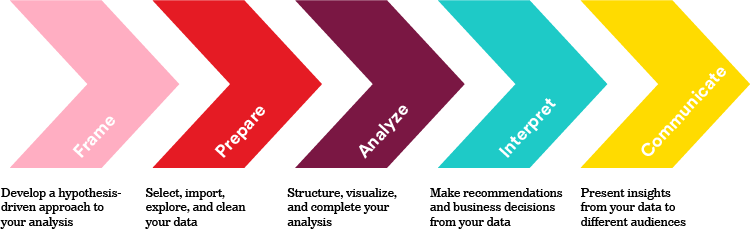
## Revisiting the data science process
|
|
|
|
It's important to place our Pandas work into the broader picture of data science.
|
|
|
|
To do so, recall our data science workflow:
|
|
|
|
|
|
|
|
<aside class="notes">
|
|
|
|
**Teaching Tips**:
|
|
|
|
- Recap what each of these steps consists of and where they've seen it applied.
|
|
- Describe why we focus on the problem-framing portion of data science, consider personal experience.
|
|
- Data science is incredibly nascent, and its impact will be fully felt when problems are well-framed in advance of applying techniques
|
|
|
|
</aside>
|
|
---
|
|
|
|
## Discussion: Condensed Workflow
|
|
|
|
1. **Identify** the problem
|
|
2. **Acquire** the right data
|
|
3. **Parse** the data
|
|
4. **Mine** our data
|
|
5. **Refine** our data
|
|
6. **Build** a model
|
|
7. **Present** our work
|
|
|
|
**Class Question**: Where have we focused our work?
|
|
|
|
<aside class="notes">
|
|
|
|
**Teaching Tips**:
|
|
|
|
- Note that this is the same workflow in a more brief wording, and also something they'll see referred to.
|
|
- Encourage discussion (answers on next slides, so when discussion seems to be wrapping up, turn the slide).
|
|
|
|
</aside>
|
|
|
|
---
|
|
|
|
## Where we focused
|
|
|
|
|
|
1. Identify the problem
|
|
2. Acquire the right data
|
|
3. **Parse the data. We did this!** Remember the Adventure Works Production.Product dictionary? Did you revisit IMDB's source to understand any columns?
|
|
4. **Mine our data. We did this!** Checked subpopulation analyses and, perhaps, feature creation. We filtered to a specific county; potentially creating our own IMDB v Rotten Tomato metrics.
|
|
5. **Refine our data. We did this!** We mutated our data using the .apply() method to modify prices and color of products.
|
|
6. Build a model
|
|
7. Present our work
|
|
|
|
<aside class="notes">
|
|
|
|
**Teaching Tips**:
|
|
|
|
- Go through these three and check for understanding / agreement.
|
|
|
|
</aside>
|
|
|
|
---
|
|
|
|
## Where we did a bit
|
|
|
|
1. **Identify the problem. We did a bit!** Identify your own question about IMDB data, and answer it.
|
|
2. **Acquire the right data. We did a bit!** Using the OMDBApi to obtain Rotten Tomato data for our IMDB dataset.
|
|
3. Parse the data
|
|
4. Mine our data
|
|
5. Refine our data
|
|
6. Build a model
|
|
7. **Present our work. We did a bit!** Maintaining clean Jupyter Notebooks (right?) and creating takeaway visualizations.
|
|
|
|
***Whew***! We did cover a lot of ground!
|
|
|
|
|
|
<aside class="notes">
|
|
|
|
**Teaching Tips**:
|
|
|
|
- Go down these three and check for understanding.
|
|
|
|
</aside>
|
|
|
|
---
|
|
|
|
## Where we didn't Focus
|
|
|
|
1. Identify the problem
|
|
2. Acquire the right data
|
|
3. Parse the data
|
|
4. Mine our data
|
|
5. Refine our data
|
|
6. **Build a model. We never did this!**
|
|
7. Present our work
|
|
|
|
> "Hey! I thought that's all data science is! Machine learning artificial intelligence neural networks [on the blockchain]!"
|
|
|
|
<aside class="notes">
|
|
|
|
**Teaching Tips**:
|
|
|
|
- This is a quick slide - it's elaborated on in the next slide.
|
|
|
|
</aside>
|
|
|
|
---
|
|
|
|
## The truth about data science (sh)
|
|
|
|
|
|
- Exploratory data analysis is typically **80%** of a data science problem.
|
|
- Modeling is **20%**.
|
|
|
|
What's more:
|
|
|
|
- The steps you take to set up your models in EDA, ultimately have a outsized impact on the result you will achieve.
|
|
|
|
|
|
<aside class="notes">
|
|
**Talking Points**:
|
|
|
|
- Many, many businesses are sitting on latent and rich ($$$) relationships in their data that a Pandas expert can unlock.
|
|
</aside>
|
|
|
|
---
|
|
|
|
|
|
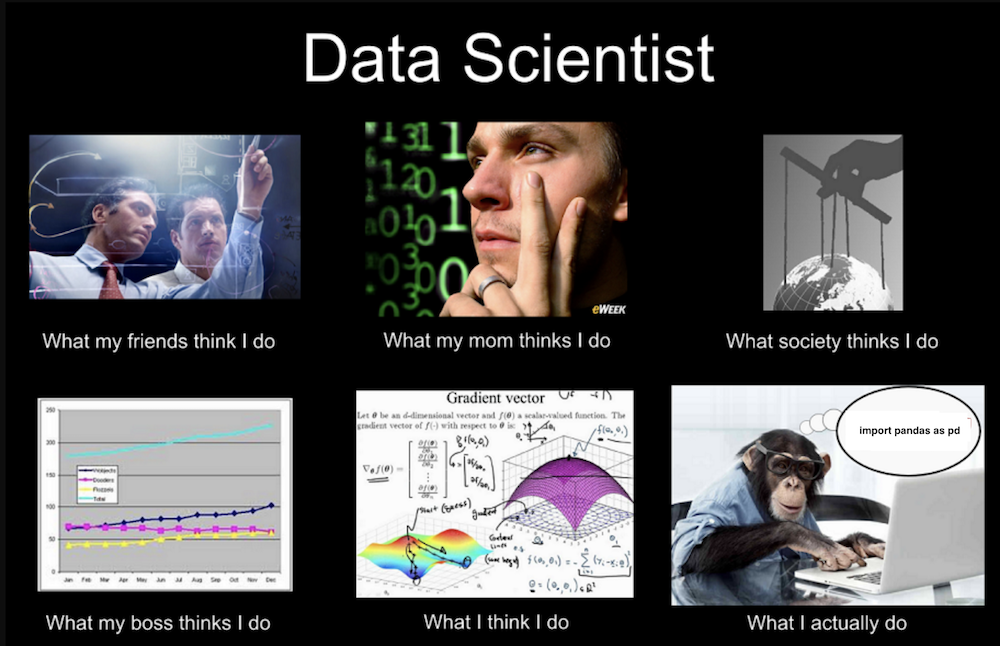
## Apologies in advance for this one
|
|
|
|
|
|
|
|
<aside class="notes">
|
|
**Teaching Tips**:
|
|
|
|
- This is just a quick slide to lighten up the room! Give students a chance to read it and laugh before moving on.
|
|
|
|
</aside>
|
|
|
|
---
|
|
|
|
|
|
## Exceptions
|
|
|
|
|
|
- Many companies will structure teams such that some individuals focus 100% of their time on the 20% of the problem which is solved by modeling.
|
|
|
|
- We've focused on Pandas EDA.
|
|
- The area you can make the greatest impact with.
|
|
|
|
|
|
<aside class="notes">
|
|
**Talking Points**:
|
|
|
|
- Of course, rules are meant for exceptions. Many companies will structure teams such that some individuals focus 100% of their time on the 20% of the problem which is solved by modeling.
|
|
- In giving you an "Intro," we focused on the area you can make the greatest impact with Python: Pandas EDA.
|
|
- In addition, there are more pre-requisites to discuss when it comes to learning modeling.
|
|
</aside>
|
|
|
|
---
|
|
|
|
## Python Data Science Package Ecosystem
|
|
|
|
|
|
We know Pandas!
|
|
|
|
- Awesome!
|
|
- Reads in data.
|
|
- Exploratory data analysis.
|
|
- Munging.
|
|
- Wrangling.
|
|
- Visualization via matplotlib
|
|
|
|
|
|
What else is there?
|
|
|
|
|
|
<aside class="notes">
|
|
**Talking Points**:
|
|
|
|
- We know the steps to solving a problem, and we know what **Pandas** can do. What about those other steps in the process?
|
|
- Many packages support our endeavors throughout the problem solving workflow.
|
|
- It would be a fool's errand to outline *every* Python library, so let's highlight the big ones. And all of these are **open source:** free to use and constantly improving.
|
|
</aside>
|
|
|
|
---
|
|
|
|
## Recommend Libraries for DS
|
|
|
|
Once you're comfortable with Pandas...
|
|
|
|
- **Seaborn:**
|
|
- Creates visualizations (of greater complexity than Pandas)
|
|
- With a few lines of code via `matplotlib`
|
|
- **NumPy:**
|
|
- Numerical computation, particularly linear algebra.
|
|
- **SciPy:**
|
|
- Scientific computation, especially statistics.
|
|
- **Requests:**
|
|
- Making web requests - calling APIs!
|
|
|
|
|
|
<aside class="notes">
|
|
**Teaching Tips**:
|
|
|
|
- Go quickly down these bullets - add your own thoughts on what you recommend students to look in to.
|
|
- If any students earlier expressed interest in something here, call them out to it.
|
|
|
|
</aside>
|
|
|
|
---
|
|
|
|
## Other DS Libraries
|
|
|
|
Not as ubiquitous or popular, but still good:
|
|
|
|
- **BeautifulSoup:**
|
|
- Easily parse HTML.
|
|
- **Statsmodels:**
|
|
- Traditional statistic inference techniques, like linear regression.
|
|
- **Scikit-learn:**
|
|
- All-purpose machine learning model construction.
|
|
- **NLTK** | **SpaCy**
|
|
- Natural language processing.
|
|
- **TensorFlow** | **PyTorch** | **MxNet**
|
|
- Neural network research and model construction.
|
|
- **PySpark**
|
|
- Interacting with big data.
|
|
|
|
|
|
<aside class="notes">
|
|
**Teaching Tips**:
|
|
|
|
- Go quickly down these bullets - add your own thoughts on what you recommend students to look in to.
|
|
- If any students earlier expressed interest in something here, call them out to it.
|
|
|
|
</aside>
|
|
|
|
---
|
|
|
|
## Discussion: What-for-what?
|
|
|
|
At what step would each library be most helpful?
|
|
|
|
The data science steps:
|
|
|
|
- **Identify** the problem
|
|
- **Acquire** the right data
|
|
- **Parse** the data
|
|
- **Mine** our data
|
|
- **Refine** our data
|
|
- **Build** a model
|
|
- **Present** our work
|
|
|
|
---
|
|
|
|
## Discussion: What-for-what?
|
|
|
|
Match up these libraries:
|
|
|
|
- **Pandas:** for reading in data, exploratory data analysis, munging, wrangling, and visualization via matplotlib
|
|
- **Seaborn:** creates visualizations (of greater complexity) with a few lines of code via matplotlib
|
|
- **Requests:** for making web requests
|
|
- **NumPy:** for numerical computation, particularly linear algebra
|
|
- **SciPy:** for scientific computation, especially statistics
|
|
|
|
|
|
<aside class="notes">
|
|
**Teaching Tips**:
|
|
|
|
- Have students discuss and try this as a group. Then, match them up and talk students through why (e.g. **requests** would be used to **acquire** the data; **seaborn** would be used to **model** the data)
|
|
|
|
</aside>
|
|
|
|
---
|
|
|
|
## Learning More - How?
|
|
|
|
- Learn by doing.
|
|
- Learning requires consuming and producing. (Perhaps even in 50/50 balance)
|
|
|
|
- Consume relevant content about what you want to learn (videos, books, etc).
|
|
|
|
- Have frequent **projects** and **exercises** to practice.
|
|
|
|
<aside class="notes">
|
|
**Teaching Tips**:
|
|
|
|
- Encourage students to learn on their own!
|
|
- Give specific suggestions if you can.
|
|
- Encourage students to identify a singular learning goal.
|
|
- Encourage students to make mistakes (seriously), and discuss why talking through problem solving is key.
|
|
|
|
</aside>
|
|
|
|
---
|
|
|
|
## Learning More - Where?
|
|
|
|
There's an abundance of resources, which can seem overwhelming, but it's actually a huge benefit.
|
|
|
|
For self-paced and online programs about a specific area, consider:
|
|
|
|
- DataCamp
|
|
- DataQuest
|
|
- Coursera
|
|
|
|
For instructor-led and guided education, come on back to General Assembly!
|
|
|
|
- We have expert-led workshops and courses in data science:
|
|
- A 10-week part-time data science (60hrs).
|
|
- The Data Science Immersive, a full-time, three month program (480hrs).
|
|
|
|
These classes walk through the full data science lifecycle.
|
|
|
|
|
|
<aside class="notes">
|
|
**Teaching Tips**:
|
|
|
|
- Encourage students to learn more!
|
|
- Give specific suggestions if you can.
|
|
- There are an abundance of resources, but a lack of discipline and support when it comes to learning. To remedy this, encourage students to work together in study groups, attend Meetups, and pair their learning with immediate application
|
|
|
|
</aside>
|
|
|
|
---
|
|
|
|
## Stretchhhh
|
|
|
|

|
|
|
|
- Stand up, stretch a bit.
|
|
|
|
- Or lie down!
|
|
|
|
- I'm not a cop.
|
|
|
|
|
|
<aside class="notes">
|
|
**Teaching Tips**:
|
|
|
|
- It's been a long course. Give them a second for a break and a smile.
|
|
|
|
</aside>
|
|
|
|
---
|
|
|
|
## What Do You Really Need?
|
|
|
|
Data scientists need three core skills:
|
|
|
|
- **Analytical thinking**
|
|
- **Mathematics and statistics proficiency**
|
|
- **Coding ability**
|
|
|
|
Let's break these down.
|
|
|
|
<aside class="notes">
|
|
**Teaching Tips**:
|
|
|
|
- This is just a quick overview - details on following slides.
|
|
|
|
**Talking Points**:
|
|
|
|
- We now have the coding ability, so in the next slides, let's talk about what else you might need.
|
|
|
|
</aside>
|
|
|
|
---
|
|
|
|
## Analytical thinking
|
|
|
|
- How well can you structure a data science problem / target an analysis for high impact output?
|
|
|
|
- Do you select metrics that align with those goals?
|
|
|
|
- Do you break a big problem into manageable, component parts?
|
|
|
|
**Class Question:**
|
|
|
|
- Imagine you are a data scientist at Facebook.
|
|
- Users list high schools they attended - some real, some fake.
|
|
|
|
How could you verify that a given high school a user listed is the one they attended? How would you measure success?
|
|
|
|
|
|
<aside class="notes">
|
|
**Teaching Tips**:
|
|
|
|
- This is a discussion! Encourage students to suggest answers.
|
|
- When they've finished, give the best answer.
|
|
|
|
**Answer**:
|
|
- Referencing a full list of true high schools, and text matching against it.
|
|
- Plotting the occurrence of various high school names, and assume that names that are more common (Jefferson, Lincoln, Roosevelt) are more likely -- consider scoring against a Z-score or Normal Distribution to determine legitimacy of various names
|
|
</aside>
|
|
|
|
---
|
|
|
|
## Mathematics and statistics proficiency
|
|
|
|
Can you apply fundamental maths and stats to problem solving? Do you have a firm understanding of probability? Linear algebra?
|
|
|
|
**Class Question:**
|
|
|
|
- There are 52 cards in a deck.
|
|
- 26 are red, and 26 are black. The 52 cards make up four suits (hearts, diamonds, spades, clubs).
|
|
- There are 13 of each suit (ace-10, jack, queen, king).
|
|
- It is a fair deck of cards.
|
|
|
|
What is the probability of drawing the 4 of spades OR a club? What is the probability of drawing any 3 OR a spade?
|
|
|
|
|
|
<aside class="notes">
|
|
**Teaching Tips**:
|
|
|
|
- This is a discussion! Encourage students to suggest answers.
|
|
- When they've finished, give the best answer.
|
|
|
|
**Answer**:
|
|
- What is the probability of drawing the 4 of spades or a club? *These two separate probabilities are 1/52 and 13/52, and they're mutually exclusive so you just add them: 14/52 or 7/26*
|
|
- - What is the probability of drawing a 3 or a spade? *There are 4 threes and 13 spades, but one of the spades is a 3. To satisfy the 'event' described in this problem, there are 16 possible draws, out of the 52 cards; P(event 'e') = 16/52 which reduces to 4/13.*
|
|
|
|
</aside>
|
|
|
|
|
|
---
|
|
|
|
## Coding ability
|
|
|
|
- Can you write readable, maintainable, efficient code?
|
|
- Can you translate your thinking skills into programmatic thinking?
|
|
- Do you know Python, R, SQL, and/or Scala? *(Yes, you do!)*
|
|
|
|
**Question:**
|
|
|
|
Do you recall Fizzbuzz? Try writing it again here from scratch.
|
|
|
|
Open a new Python file, `fizz.py`.
|
|
|
|
- Write a program that prints the numbers from 1 to `n` (passed in).
|
|
- But, for multiples of three, print “Fizz” instead of the number.
|
|
- For multiples of five, print “Buzz”.
|
|
- For numbers which are multiples of both three and five, print “FizzBuzz”.
|
|
|
|
|
|
<aside class="notes">
|
|
**Teaching Tips**:
|
|
|
|
- Have each student try to do this in their own time. Allow 5-10 minutes.
|
|
- When they've finished, give the best answer with explanation.
|
|
|
|
```python
|
|
def fizzbuzz(n):
|
|
|
|
if n % 3 == 0 and n % 5 == 0:
|
|
return 'FizzBuzz'
|
|
elif n % 3 == 0:
|
|
return 'Fizz'
|
|
elif n % 5 == 0:
|
|
return 'Buzz'
|
|
else:
|
|
return str(n)
|
|
|
|
print "\n".join(fizzbuzz(n) for n in xrange(1, 21))
|
|
```
|
|
|
|
</aside>
|
|
|
|
|
|
---
|
|
|
|
## Establishing Yourself as a Data Scientist
|
|
|
|
1. Start a blog.
|
|
- Blogs are incredibly common in technology.
|
|
- They demonstrate your learning process.
|
|
|
|
2. Share with your network.
|
|
- Keep your friends and coworkers engaged on what you're doing and learning.
|
|
- Opportunities are sometimes spurious.
|
|
|
|
3. Attend Meetups and other networking opportunities to learn, meet, and share.
|
|
|
|
|
|
<aside class="notes">
|
|
**Teaching Tips**:
|
|
|
|
- Encourage students to learn more!
|
|
- Give specific suggestions if you can.
|
|
- Emphasize the importance of blogging to prove retention of information.
|
|
|
|
</aside>
|
|
|
|
|
|
----
|
|
|
|
## Summary:
|
|
|
|
- There are many paths you can go!
|
|
- Check the Additional Reading for links to libraries.
|
|
- You probably want Seaborn, NumPy, or SciPy.
|
|
- Work on your core skills!
|
|
- Analytical thinking.
|
|
- Mathematics and statistics proficiency.
|
|
- Coding ability.
|
|
|
|
|
|
<aside class="notes">
|
|
**Teaching Tips**:
|
|
|
|
- Do a quick recap for understanding.
|
|
- See if any students have questions about their potential next steps.
|
|
|
|
</aside>
|
|
|
|
|
|
---
|
|
|
|
## Additional Reading
|
|
|
|
- [Pandas docs](https://pandas.pydata.org/pandas-docs/stable/#)
|
|
- [Seaborn docs](https://seaborn.pydata.org/)
|
|
- [Requests docs](http://docs.python-requests.org/en/master/)
|
|
- [NumPy tutorial](https://docs.scipy.org/doc/numpy-1.13.0/user/index.html)
|
|
- [SciPy tutorial](https://docs.scipy.org/doc/scipy/reference/tutorial/index.html)
|